We are so excited to present our new and updated tensegrity pelvis model, by popular demand! The new and improved Tensegrity Pelvis model is now available. Designed as an educational and demonstrative tool, this model allows users to better understand the principles of tensegrity within the human body. The update was driven by user feedback,… Read more
MASSAGE THERAPY
Anatomy Trains just makes sense. Regular anatomy is valuable, but it separates the body into ‘parts’. See the whole again with Anatomy Trains! Therapeutic Massage practitioners the world over have benefitted from Anatomy Trains – seeing patterns, including fascial structures in their work, and filling in what’s under your hands for a more complete treatment.
How Do I Start?
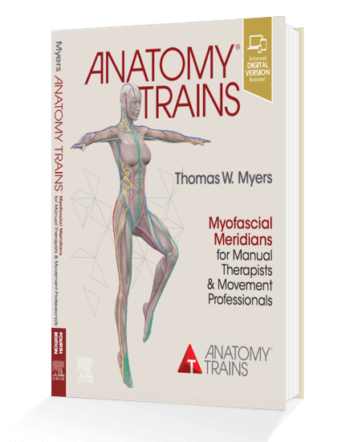
Kickoff your education with Anatomy Trains by reading Anatomy Trains Fourth Edition by Tom Myers. You’ll learn how the muscles are functionally linked in ‘myofascial meridians’ through the fascial webbing.
We also have a great collection of On Demand Learning courses geared towards manual therapsists on our website here.
Featured Blog Posts
Read the latest news from Tom Myers and Anatomy Trains
Gil Hedley’s Nerve Tour by Tom Myers
It was a great pleasure to attend Gil Hedley’s Nerve Tour in Portland, Maine, last night. With his characteristic flair, Gil unfolds a complete anatomy of our neural net, woven with a unique and touching story of ‘Captain’ – the model for much of the project – and the involvement of his family and other… Read more
Q & A with Tom Myers: Electric Massage Tools?
Question from a follower on social media: Hi! I love the work of Tom Myers. Could he discuss his views on electric massage tools? Tom: Thanks for the question! Three levels of answer: 1) I am an advocate for the human hand – for human touch, its skill and its comfort and connection to a… Read more
Anatomy Trains Structural Integration Certification Training Program on the West Coast!
We are thrilled to invite you to take your career to the next level with Anatomy Trains Structural Integration (ATSI) certification training, led by Anatomy Trains author Tom Myers in San Diego, California, in 2024! “The program exceeded my expectations. It gave me a recipe that I can follow to make sure I am taking… Read more