
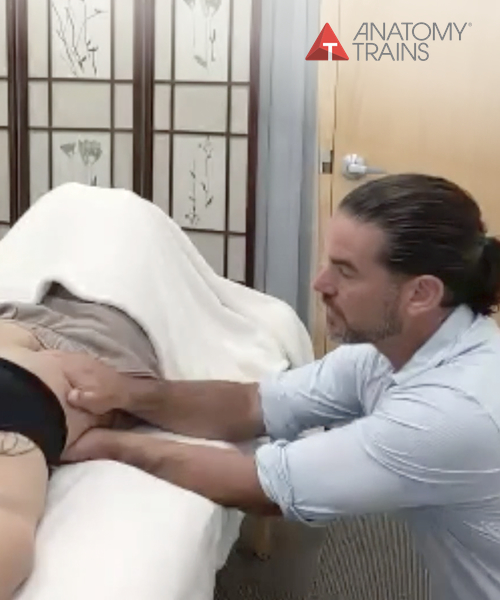
This webinar series is focused on working with women postpartum, presented by Anatomy Trains Senior teacher Michael Watson.
This series is 4 x 2 hour webinar sessions, with a combination of anatomical principles and demonstrations on a live model for postural assessment, strategy, cueing, and manual and movement therapy for women postpartum.
Session 1: Goals & Principles of Structural Integration in the Postpartum Body
Duration: 2 hours
Part 1: Foundations of SI in the Postpartum Period
- Introduction to Structural Integration: Ida Rolf’s legacy
- Understanding postpartum physiology and fascia: changes in the body’s tensegrity model
- Why SI matters postpartum: the role of gravity, structure, and sensory awareness
Part 2: Core Goals of Postpartum SI
- Reestablishing core line and grounding
- Reorganizing pelvic-lumbar relationships
- Supporting myofascial decompression and hydration
- Enhancing somatic presence and psycho-emotional integration
Part 3: Fascial Adaptations During Pregnancy & Birth
- Myofascial elongation and shortening patterns
- Pelvic diaphragm strain and tailbone torque
- Scar tissue impact (e.g., cesarean, episiotomy)
- Visceral repositioning and breath limitations
Part 4: Body Mapping & Assessment
- Hands-on fascial listening
- SI-style body reading in standing and walking
- Identifying asymmetries in the pelvis, legs, and breath
- Postpartum timeline: when to begin and contraindications
- Practice Demo: Postpartum fascial glide tests and pelvic tilt assessment
Session 2: The Pelvis, Core & Breath
Duration: 2 hours
Part 1: Pelvic Floor Integration
- Layers of the pelvic floor: anatomy, fascial connections (via the Deep Front Line)
- Addressing pelvic pain, prolapse, urinary incontinence
- Re-establishing tone and lift without over-contraction
Part 2: Abdominal Wall & Diastasis Recti
- Fascial sheath of the rectus abdominis and transversalis
- SI strategies to support natural closure
- How to work without reinforcing splinting or bracing patterns
Part 3: Breath & Core Coordination
- Rib cage mobility and postural restoration
- Relationship between breath, pelvic floor, and thoracic outlet
- Breathwork as a fascial decompression tool
Practice Demo:
- Pelvic lift with breath awareness
- Fascial work around the pubic arch and iliacus
- Diaphragmatic decompression techniques
Session 3: Reclaiming Spine, Ribs & Upper Body
Duration: 2 hours
Part 1: The Breastfeeding Body
- Forward head, collapsed sternum, internally rotated shoulders
- SI techniques to support spine length and thoracic decompression
- Working with the intercostals, serratus anterior, scalenes
Part 2: Repatterning Arm & Shoulder Use
- Upper limb strain from carrying and lifting
- Fascia connections from shoulder to pelvis (Superficial Front/Back Lines)
- SI strategies for scapular release and clavicle opening
Part 3: Restoring Spinal Continuity
- Lumbar compression patterns from birth positions and carrying
- T12, sacrum, and coccyx relationships
- SI work to restore spinal wave and segmental articulation
Practice Demo:
- Rolfing-inspired side-lying spinal decompression
- Arm line fascial glide work
- Breast tissue and pectoral myofascial release (with consent & draping)
Session 4: Integration, Movement & Psycho-Emotional Recovery
Duration: 2 hours
Part 1: Fascial Integration through Movement
- From table to movement: why movement is crucial postpartum
- Gait, posture, and dynamic balance restoration
- Rebuilding the spiral lines: contralateral movement and rotation
Part 2: Psycho-Emotional Landscape of Postpartum
- Somato-emotional patterns in the pelvic floor and diaphragm
- Touch as safety: trauma-sensitive SI practice
- Listening touch and the importance of pacing
Part 3: Creating a Personal Integration Plan
- Mapping a 5–12 session SI sequence for postpartum clients
- Adapting the 12-Series or Principles Model
- Home exercises and movement prescriptions
Practice Demo:
- Standing wave exercise
- Embodied cueing for core and pelvic floor
- Partner touch practice: listening hands on sacrum
Previously presented live via Zoom, August 2025
Run time: Approximately 8 hours
Note: This course is designed for educational purposes only. Pilates and yoga instructors and fitness trainers are not legally licensed to perform some of the techniques presented. However, by gaining a deeper understanding of the conditions, anatomy, and therapy approaches discussed, movement practitioners will be better equipped to support their clients within the legal scope of their massage practice.

Reviews
There are no reviews yet.