
An Anatomy Trains–Inspired Educational Model
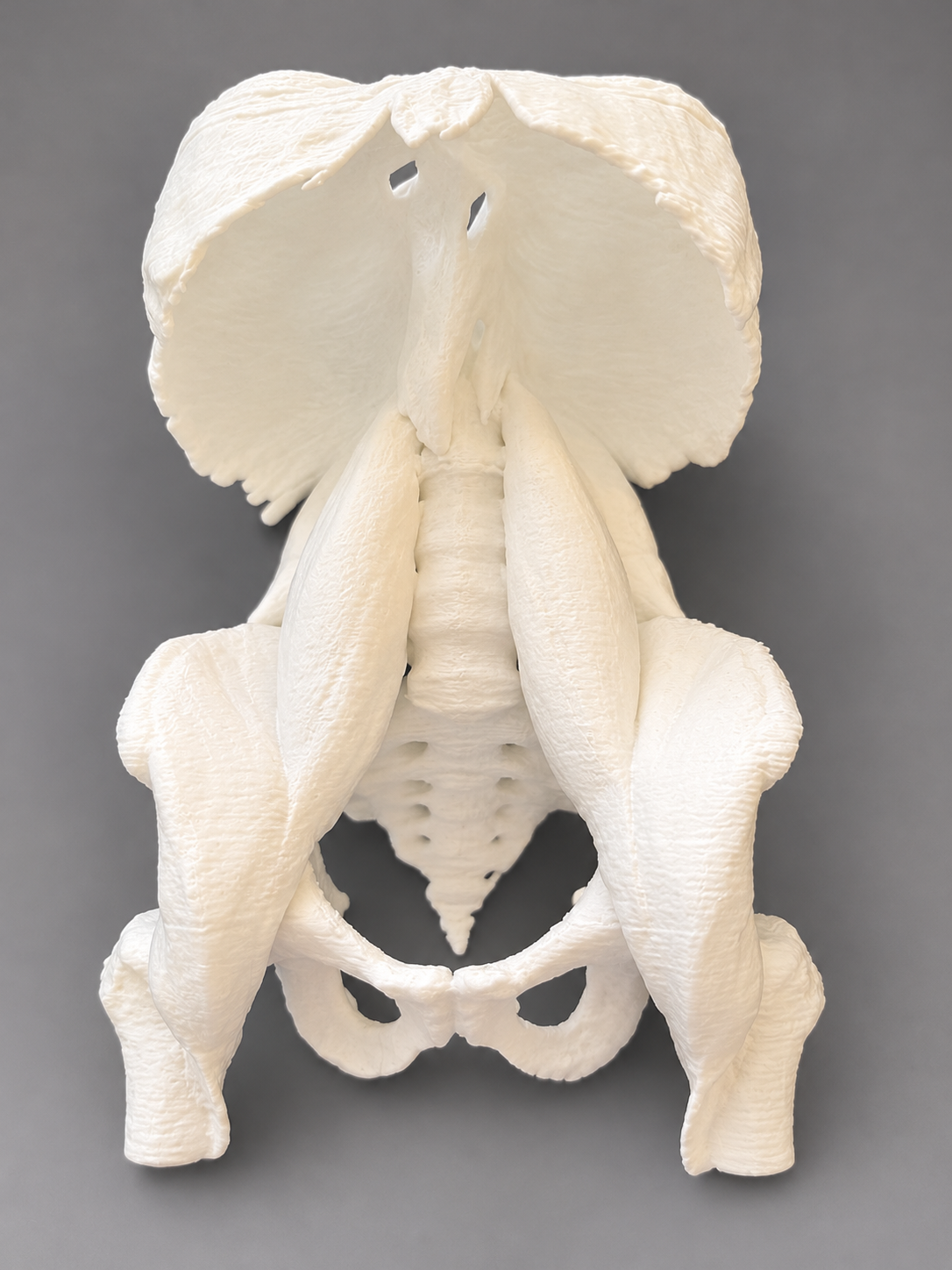
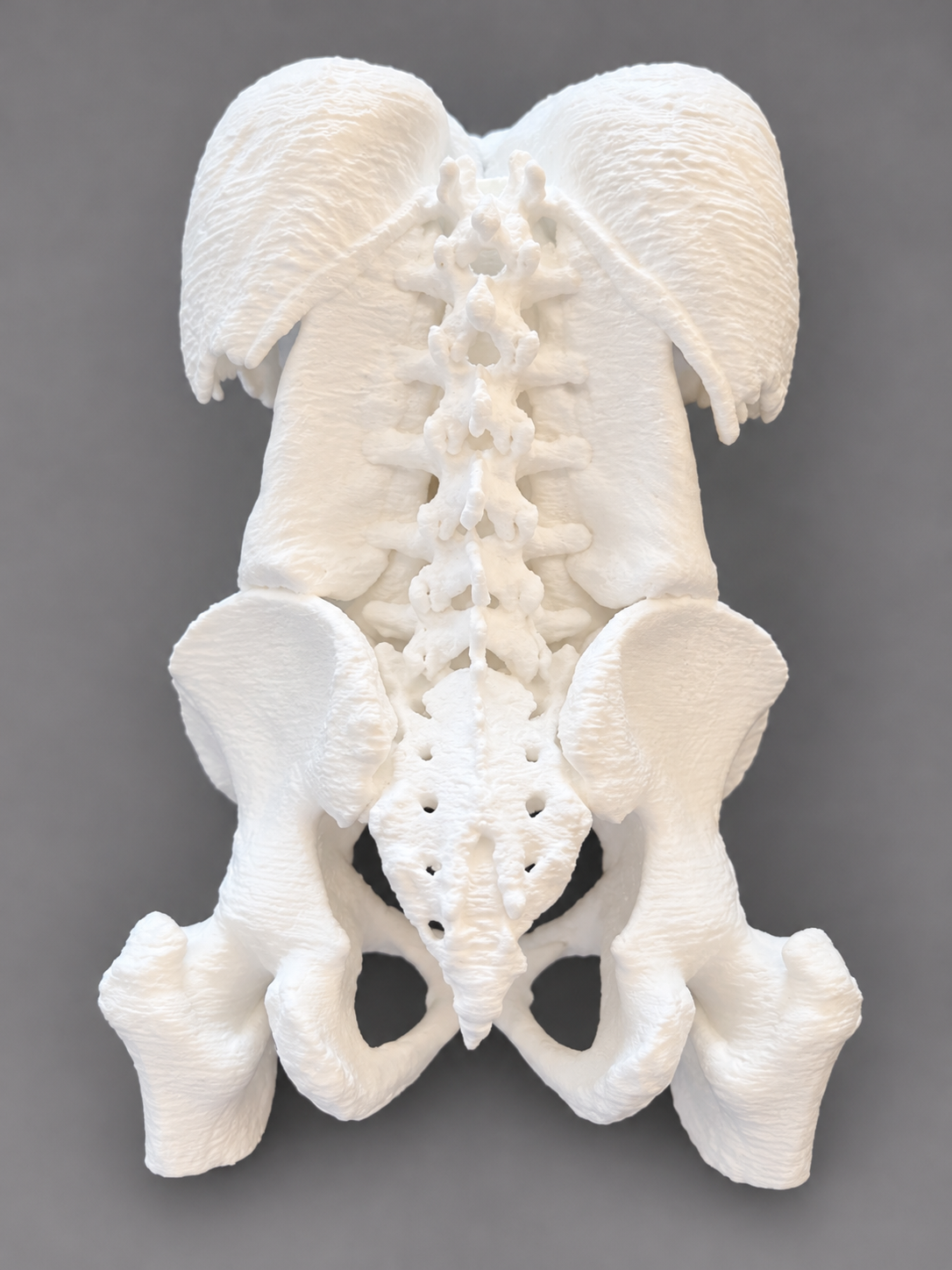
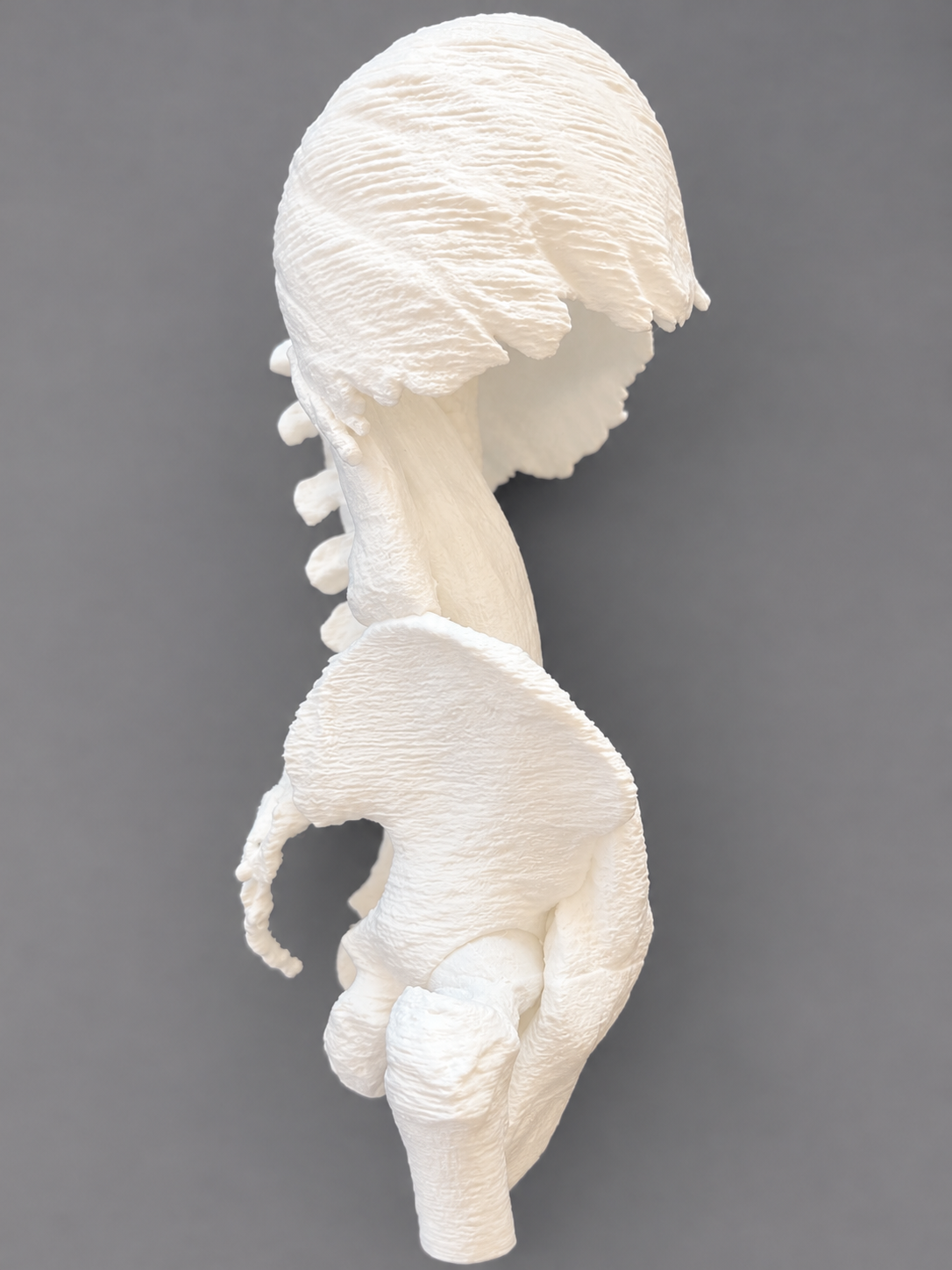
This custom-designed, 3D-printed anatomical model illustrates the unique structural and functional relationship between the psoas major muscles and the respiratory diaphragm, a relationship that Tom Myers describes in his Anatomy Trains work as the “Cobra.”
The model brings to life the concept of the inner core by showing the diaphragm and bilateral psoas major muscles as an integrated myofascial system as part of the Anatomy Trains Deep Front Line, rather than as two separate anatomical structures.
The broad, bilateral diaphragmatic domes form the head and hood of the cobra, while the paired psoas major muscles extend inferiorly alongside the lumbar spine, continuing toward their attachments at the proximal femurs attaching to the lesser trochanter, forming the “tail”. The model also incorporates the lumbar vertebral column, sacrum, pelvic ring and proximal femurs, providing important anatomical context for understanding this relationship.
Educational Value
This three-dimensional model offers a particularly useful way to explore:
- The anatomical and fascial relationship between the respiratory diaphragm and psoas major.
- The relationship of the psoas to the lumbar vertebrae, pelvis and hip joints.
- The integration of breathing, spinal support and lumbopelvic stability.
- The relationship between the deep front line/anterior myofascial system, postural organization and gait.
- The concept of the inner core as a dynamic relationship between breathing and movement.
Intended Use
An excellent teaching and demonstration resource for:
- Anatomy Trains courses and workshops.
- Myofascial anatomy and dissection education.
- Manual therapy and structural integration training.
- Movement professionals, yoga and Pilates educators.
- Physical therapists and other rehabilitation professionals.
Custom Fabrication
A custom 3D-printed reproduction of the anatomical configuration shown in the accompanying reference photographs.
The model retains the recognizable contours and spatial relationships of the diaphragm, bilateral psoas muscles, lumbar spine and pelvis. A clean white anatomical finish is preferred to highlight the three-dimensional structures and make the model suitable for classroom demonstrations and professional teaching environments.
The goal is to make the invisible visible: a tangible, three-dimensional representation of the psoas–diaphragm relationship and the dynamic inner core described by Tom Myers.
Enjoy a video from Anatomy Trains CEO Mel Burns demonstrating how this model works:
Product dimensions: approximately 9″ x 5″ x 3″
Weight: .75 lb



Reviews
There are no reviews yet.