![]() |
![]() |
![]() |
![]() |
![]() |
Face Work
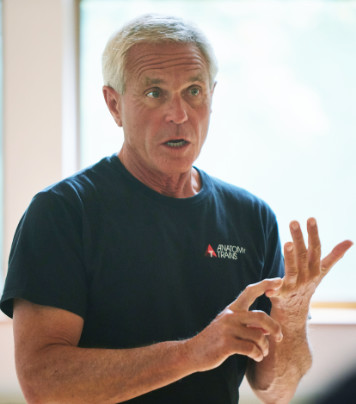
Stanley Rosenberg
Walpole, Maine
July 19-20
Registration details
The work on the face is different that the rest of the body in a few important ways.
The innervation of the skin of the face is from the trigeminal nerve as are the muscles of mastication. The muscles of the face are from C.N. VII. C.N. V and VII are two of the cranial nerves which Stephen Porges considers as part of the five cranial nerves necessary for the state of of "social engagement". Working on the face not only helps the way that people look, but it also improves the function of the autonomic nervous system. The nerves to the skin, muscles and fascia of the rest of the body come from spinal nerves.
The face does not have a distinct layer of superficial fascia.
Dental work such as tooth extraction and braces often moves the pterigoid process of the sphenoid bone out of position, impinging on the ganglion of the fifth and seventh cranial nerves. We address this problem at the start of the series to insure a good result when we come to work on the facial muscles and the muscles of mastication.
We also include some cranial techniques on the facial bones, and work down to the layer of periosteum. We do a lot of training the therapists to look before and after the techniques - so that they know what to expect and how to evaluate the level of the response of the client (like a Rolfer looking before and after a technique).
Stanley Rosenberg completed Rolfing training in Europe in 1983. Tom Myers assisted that training with both anatomy and hands on training. Started cranio-sacral therapy education with the Upledger Institute. Went on to study cranio-sacral therapy, visceral massage and tensegrity with the French osteopath, Alain Gehin from 1994 to the present. He met Stephen Porges in 2001 and developed a protocol of biomechanical cranio-sacral techniques to establish function in the 5 cranial nerves necessary for social engagement.
Copyright 2012 Kinesis, Inc.